Monday, 27 May 2013

Sloth - More Than Just A Deadly Sin

Sloths are known to be one of the slowest creatures on Earth, and no one has seemed to take much notice of them. Until recently, that is. Lately there has been an explosion in sloth popularity and these creatures are suddenly the talk of the internet.
Sloth lovers appear to be separated into two groups: those that think sloths are incredibly cute and cuddly, and those that think that the "cuddly" part is regularly "forced" upon others. Both me and my best friend Kaity are a part of this sloth obsession, however we are part of the group that see sloths as incredible cute and cuddly.


One possible reason why sloths became so popular was when Kristen Bell confessed of her love for sloths on the Ellen Show.


However, there is a sloth which has been with us who made sloths cool before they were... well... cool. Sid the sloth from ice age has almost been forgotten amongst all the excitement about sloths. As much of a shame as this is, with the Ice Age movies continuing to be brought out, I doubt he will ever be forgotten.


Sloths appear almost harmless because of their slow movements and apparent stupidity. They are so slow that algae and moss can grow on their fur and so stupid that some even grab their own arms, mistaking them for branches, and fall out of trees. However, if you did not know these things about sloths, I think you would be pretty scared if this came after you:

Personally, I would be terrified.

To finish off this post, as it may be my last, I give you, the reader, a gift. Here is a video of baby sloths learning to climb:


And another, inspirational little clip:


Out of all the sins, I choose sloth... because they're cute.

Home Away From Home

One of the most difficult parts of anyone's life is leaving. I don't mean the kind of leaving where you leave work after a long day, you leave home to go shopping or you leave a mate's house because there are productive things you should be doing but aren't. I mean leaving your home, permanently. Moving out. Leaving the nest. Any cliche you can think of, think of it.
Many people when they move out they move to a different house, sometimes just down the street, but not me. I moved eight hundred kilometers away. Eight hundred kilometers away from my home. Eight hundred kilometers away from my family. Eight hundred kilometers away from my friends. Eight hundred kilometers away from my boyfriend. Eight hundred kilometers away from my dog.
I did it for my future, to come to James Cook University to get the qualifications to continue my life the way I want it to be. I made the decision a long time ago that I wanted to be an acedemic, a person of high education. It is where I belong.
However this meant moving a long way away from my little country home town of Mount Isa to the city, Townsville, right on the beach. It has been a huge change, the biggest of my life. Going from the outback to the tropics is a big contrast and it hit me hard when I first came here. But it was one of the best decisions of my life.
Yes it is and always will be difficult to be away from all I've ever known and loved, but there is a whole world out there that I want to get to know and this is only the beginning. University is only a gateway to the big wide world, and I have the key.

Outback Jack

Outback Jack's Bar and Grill is a little steak house on Palmer street in Townsville which revels in the Australian outback cliche and serves typical outback food. Tonight me and my boyfriend decided to go there for dinner, and the only regret I have is being so full I could barely walk afterwards, although, I don't think I even regret that.
My boyfriend Zac, being a guy, of course got a steak. But not just a steak, the steak deemed "Mother of all Steaks" on their menu. It wasn't the 1kg steak challenge, but it was 500g of well done, juicy meat complete with a side of chips, salad and coleslaw.
I decided I was going to have another classic Aussie favourite, bangers and mash. These sausages and mashed potatoes were delicious and were complimented with the sort of gravy you can only expect at good restaurants. I was told by the waiter that my meal only came with the mashed potato, so I also ordered a side of chips. The "side" of chips turned out to be a very full dinner plate of some of the tastiest chips I've ever eaten, or maybe I was just really hungry. Better than that, but I got salad and coleslaw too!
The entire thing was delicious, although I knew from the start that I had no chance of finishing the chips without help, help which Zac was very glad to give. Complementing the food was also drinks. While Zac stuck to water, I decided to be a little adventurous. Being both underage (only by a couple of weeks) and the designated driver, I could not have anything that contained even a trace of alcohol. However, I made do with an orange juice and an iced chocolate with whipped cream, ice cream and cocoa powder.
By the time I neared the end I was getting pretty full, but the mashed potato was so good I knew I had to at least finish that. Zac was able to finish the last few chips and the last half of my last sausage, although he could barely finish that. Boys... they always have room for more.
The service was also very good, with the waiter checking up on us regularly enough that we could get everything we needed when we needed it, but not so often enough that we were interrupted or irritated. Overall it was an incredible meal and I would definitely eat there more often.

Les Animeux Domestique, les Enfants et le Cuisine

In Townsville, one of the most popular places to go is The Strand, the beach that runs alongside the city with shops, seagulls, and a lot of sand. When walking along the beach, you can see many dogs and children running around and playing. It is a very pet and child friendly place. Just the other day I saw a extremely fluffy little dog sitting by it's owners as they sat and ate near the beach. A lady who was walking her miniature poodle past the couple stopped because her dog appeared excited at the other dog's presence. The dogs sniffed for a while before simultaneously jumping and playing around before the lady walked on. It was one of the cutest things I had seen all week.
Walking down the path many dogs can be seen walking along, all different breeds, both big and small. I have seen beagles, poodles, labradors, bulldogs, chihuahuas and golden retrievers. Owners can show off their best friends, and little terrors in the form of children.
All along The Strand playgrounds and parks are scattered and kids can be seen and heard laughing and playing regardless of where you are along the beautiful beach scene. The water park is a popular place where parents can sit back and relax and chat to each other as their kids, usually between the ages 4 and 10, play with many others their age. The Strand is a great place to relax and let all of the stress go without worrying about your children.
There are also many shops such as Harold's Fish and Chips, Juliette's Gelatto and the Coffee Club. This particular little area is extremely popular, and is crowded even until 7:30 at night.
Harold's Fish and Chips uses local fish and cooks an amazing meal, just ask one of the many customers. They will cook up the cliche seafood such as the good old fish and chips, fisherman's basket and scallops, all with tartare sauce, of course.

Sunday, 26 May 2013

Tutorial #12

During this tutorial, the class watched a documentary on the New York times and how they have developed in the news world. The documentary showed many problems that arise during journalism careers such as how the public does not like journalists, the conflict with public relations and situations such as when a journalists is sent to a war zone.
One of the biggest controversies in New York Times history was when a reporter sent back secret military documents which had the potential to endanger American soldiers. There were arguments both for and against the journalist's decision.
The argument against the decision was that the military documents contained secret information that could endanger the soldiers fighting in the war. These were things such as tactics, safe houses and things of the like. The release of this to the public meant that anyone could get a hold of it, even members of the enemy army if they wanted to.
The argument supporting the journalist's decision was that the public has the right to know what is going on, and that it is the journalist's job and duty to supply the information for them. A large percentage of the public read the documents which showed that there was large interest in it, increasing the popularity of the news outlet.
This is one of the biggest problems with journalism, the duty of the job conflicts with what people believe to be humanly moral, as I have explained in a previous post.

Tutorial #11

In this week's lecture and tutorial, students presented their story pitches. These ranged from stories about animal abuse to the homosexual community. My own pitch was about American exchange students living on college and the change between life in America and life here in Australia.
A story pitch is not a story already written, but what a journalist does when they want a story to be published, they are selling the idea.
The journalist must take many things into account when pitching a story. The first of these is the outlet they wish to publish the story. I chose the outlet JCNN because the story I pitched is local to the university. I would not have chosen another outlet, such as the Townsville Bulletin, because the readers would be interested about stuff to do with the Townsville community rather than the university.
A major factor of the story is the format that it will take. Will it be a print news story? A television news story? Or, in my case, an online article?
Another aspect that has to be taken into account is the news values of the story. The news values are what draw the reader in, such as proximity, relevance, human interest, conflict and health. The news values of the story I pitched were proximity and relevance. These are appropriate because not only is the story close within the university, but students can relate to it.
Length is a big part of the pitch. This means the length of the story as well as how long it will take to complete it.
Every good story has images that can go with it. During the pitch, images should be identified and used that will compliment the story. For example, in my pitch I displayed images of America (taken by one of the American girls on my floor) that will help show the contrast between American and Australian life.
For a story to be professional, the information has to come from a reliable source. Without these sources, the reliability of the story will be questionable. The sources I got in contact with were the three American girls on my floor at Saint's Catholic College.
The story pitches were done well and there was a lot of potential for the stories to go further and actually be pitched to a news outlet.

Tutorial #10

During this week's tutorials the class practiced their interviewing skills by setting up the classroom as a press conference. Several students sat in front of the classroom to be asked multiple questions by their peers. Each person was only allowed to ask five questions each and they had two minutes to get as much information as they could to create a story.
Marie, the lecturer, suggested that we do not follow leads from other journalists, and instead find our own angle. She also said that the person being interrogated should not help the interrogators, they should give simple answers and not give too much away. We were given no prior information about the subject except their name, age and where they are from.
The first person to be questioned was Nick, who took the "don't give too much away" part too seriously. Deciding to be a smart ass, Nick gave as little information as possible. For example, when I asked about his family, he said, "Fine thanks." After the two minutes was up, hardly anyone had a story because of the way it was handled. Although some people blamed Nick for this, Marie stated that there are no bad questionees, just bad questioners.
The next person to sit in front of the class was Dana. The main story the class got out of her was her aspirations to become and actress, but her studies to be a journalist are a more down to Earth and realistic option for her.
The last person to be questioned was Yunki, a quiet exchange student from South Korea who was asked by the lecturer to be questioned. Because of his ethnicity and situation, there was a lot more that the class could ask Yunki about, so Marie gave us a whole five minutes for the interview.
Yunki was asked about the sports he played both back home and here. Back home he would play basketball, football, and all those types of sports. Here in Australia, however, he plays ultimate frisbee (a frisbee also being the one thing he would take from Australia back home to South Korea).
One of the major interests that the class asked about was that Yunki had to serve at least two years in the military as a compulsory part of life. During this time, although he had no real interest before the military, Yunki developed a hatred of North Korea, fitting in with the cliche of North vs. South.
When the interviews were finished, the class had developed more interviewing skills because of the exercise. Putting us all in such a real life situation made us all think about what to do and how to go about it.

Afro Circus

The circus has come to town...sville and the public has the chance to watch lions, monkeys, ponies, camels, llamas, dogs, clowns, acrobats and trapeze flyers. The Lennon Bros. Circus will be in town for a few weeks until the 2nd of June, which is their last show day.
One of the main continuing acts of the night was Izzy the clown, who would be pranked by the ringleader between acts. Then, Izzy would try to prank his fellow clown, Pluto, however it would backfire and Izzy would be left looking like a... well... clown.
One such prank was when the ringleader gave Izzy a gift of a telescope, which obviously didn't work. The ringleader would ask Izzy to look into the telescope and hold up to the other end a star, a moon, a black cloth (seen to Izzy as a black cloud), and a lighted match (seen to Izzy as lightening). Finally, the last time Izzy looks into the fake telescope the ringleader pours a jug of water down the tube, soaking Izzy's front.
Izzy would then wish to use the prank on someone else, usually picking on a member of the audience. In this case, Pluto comes along and, as can be expected, Izzy has a "present" for him. As Pluto looks into the tube Izzy runs to get a bucket of water, but every time the ringleader urges him to pull the prank properly. First showing the star, then the moon, then the "black cloud" and finally the "lightening." Between each of these Izzy runs to get the bucket but the ringleader stops him. At one stage Izzy almost throws the water onto audience members, but flicks it onto them instead when the ringleader says, "No not even a little bit."
Finally Izzy gets his chance and pours water down the tube. However it does not come out the other end. The ringleader tells the frustrated Izzy to look through the end of the tube he poured it in to see, and as can be expected Izzy gets soaked once more.
Several puns were being used by the clowns as well, such as when Izzy is chasing after Pluto with a mining pick, Pluto yells, "He's picking on me!"
At the end of the performance, a surprise is in store. The trapeze artists begin to fly in the air and Izzy wants to have a go. During the swing the artist that was supposed to catch him pulls off his pants, revealing very bright and embarrassing boxers. Izzy falls onto the net and the ringleader tells him he's a clown, not a flyer, and that he needs to be dressed as a flyer to be one. Izzy turns to the audience, says "Oh yeah?" and takes his hat, shirt and boxers off revealing a pink mohawk, tights and a surprising body for what everyone thought was a clown. Izzy (still called Izzy) continues to be a part of the trapeze show, which is the last act.

Drawing Circle

On Friday night, on the 26th of May 2013, at the Great Northern Hotel in Townsville, a small time local band played their very first gig in front of dozens of supporters. Friends, family and complete strangers all gathered to listen to the alternative band, called Drawing Circle, play a few songs. They were enjoyed so much that the audience called for an encore, which unfortunately the band did not prepare for.
Drawing Circle consists of members Jake Omelaniuk (lead vocals and songwriter), Rick McCarthy (bass guitarist), Andrew Cameron (drummer), Joel Ross (lead guitarist) and Matt Rogers (rhythmic guitarist). It was obvious that each of these members absolutely loved performing in front of their audience just as much as the audience loved listening to them.
Lead singer and youngest member of the band at 18 years old, Jake Omelaniuk was thrilled to have performed, and afterwards it could be plainly seen that he was still buzzing from all of the excitement. Jake writes all of the band's lyrics and would have had an encore prepared if he had finished a song he had been writing only days beforehand. After the second song Jake shouted out to his "gorgeous girlfriend" Ash Rutherford, who seemed almost more excited than Jake himself. Ash could be seen jumping and smiling and as the focus was turned on her you could see how happy she was to be their supporting her partner and the band.
The band played three songs which could be heard from down the street. The crowded hotel is only a start for this up and coming band and it can be assured that they will rise to be one of Townsville's most popular and well known music groups.
Drawing Circle had a twenty minute set, although the audience wanted more, and were one of the most adrenaline pumping acts of the night. They were a hard act to follow, although a Mount Isa country singer gave it a good shot. The audience was extremely pumped during the band's performance and noticeably calmed down when it was their time to step down. This just goes to show the talent of the group.

Friday, 24 May 2013

This photo was taken during lecture recess. It could be used in a food/cooking story about a little Townsville cafe in the city called Betty Blue.

Tutorial #9

Ethics are the unspoken rules that define our actions.
Ethics in journalism gets a little bit more complicated than that.

The major issue with ethics in journalism is the conflict between the part that is a citizen, and the part that is a journalist. Both have a duty to attend to. As a citizen, you have a duty to care for others and uphold justice where possible, to decrease pain and be all that is humane. As a journalist, your duty is to get the story, nothing else. No interfering. No changing the course of events. Just watching, recording, taking notes and in some cases asking questions.
There are principles concerned in how a journalist goes about things which are much more loosely defined than a member of the public, although there is no right involved. For example, if a person passes away, a journalist might approach the family to get or complete a story. The family would be very upset, of course, but the journalist would need a story. The family does have the right to turn them away, but the journalist has more right than ordinary citizens to pry, however unethical some may see it to be.
One example of questionable ethics was when a priest set himself on fire and two journalists were sent to record the incident. After a few moments, it could be seen that no help was coming and one of the men set to putting the fire out. The reason why ethics are questioned in this instance was because the two men were there to watch this man burn alive, not to stop it from happening or cease his suffering like any normal person would try to do. One did help after a while, but the fact that they waited is what is questioned.
Pain and suffering is at the centre of conversations about ethics. It seems and unspoken rule to try our best not to cause such suffering or allow it to happen because of our empathy and instincts, such as the will to not only survive but thrive in our existence. This is where journalists sometimes fail, and most of the time it is because it's their job.

“All things must be examined, debated, investigated without exception and without regard for anyone's feelings.”   ― Denis Diderot

Tuesday, 21 May 2013

Tutorial #8

There may be a time in a journalist's career that they will be asked to cover stories surrounded by warfare and conflict. There are many challenges that arise from this situation.
The first problem is that to keep safe, the journalist must stick with soldiers. The problem here is that the journalist will only see what the soldier sees, they cannot go off and investigate something they feel they should without risking their lives.
The journalist might also find themselves in the position that they become a part of the military operation. This is a strong negative because it is difficult to report whilst in a conflict zone regardless, even more so when your focus is more on the job and staying alive than writing up a story.
There is a big problem that is caused before the journalist is even put in these situations, and that is the lack of preparation. Can you really prepare someone for the death and destruction that will surround them? How could you ask someone to head straight into the disaster zone and watch people die, people they will have met and conversed with, and come out of it unscathed? The truth is, you can't.
The result of all this is called post traumatic stress disorder, or PTSD for short. PTSD comes from situations, such as warfare, where there is a lot of conflict, destruction and even death. It is not restricted to just war, but criminal acts, such as robberies, shootings and murder, motor accidents and natural disasters.


A journalist will be greatly affected if they witness a criminal committing an act against the law and they aren't equipped to handle or even stop the situation. In fact, it can lead to moral conflict because it isn't their job to step in, but the human part in all of us would want it to stop.


A lot of damage can be the result of motor accidents, and a lot of the time people are injured, some even dead. Any sane person would hate to witness these things, yet it is a journalist's job.


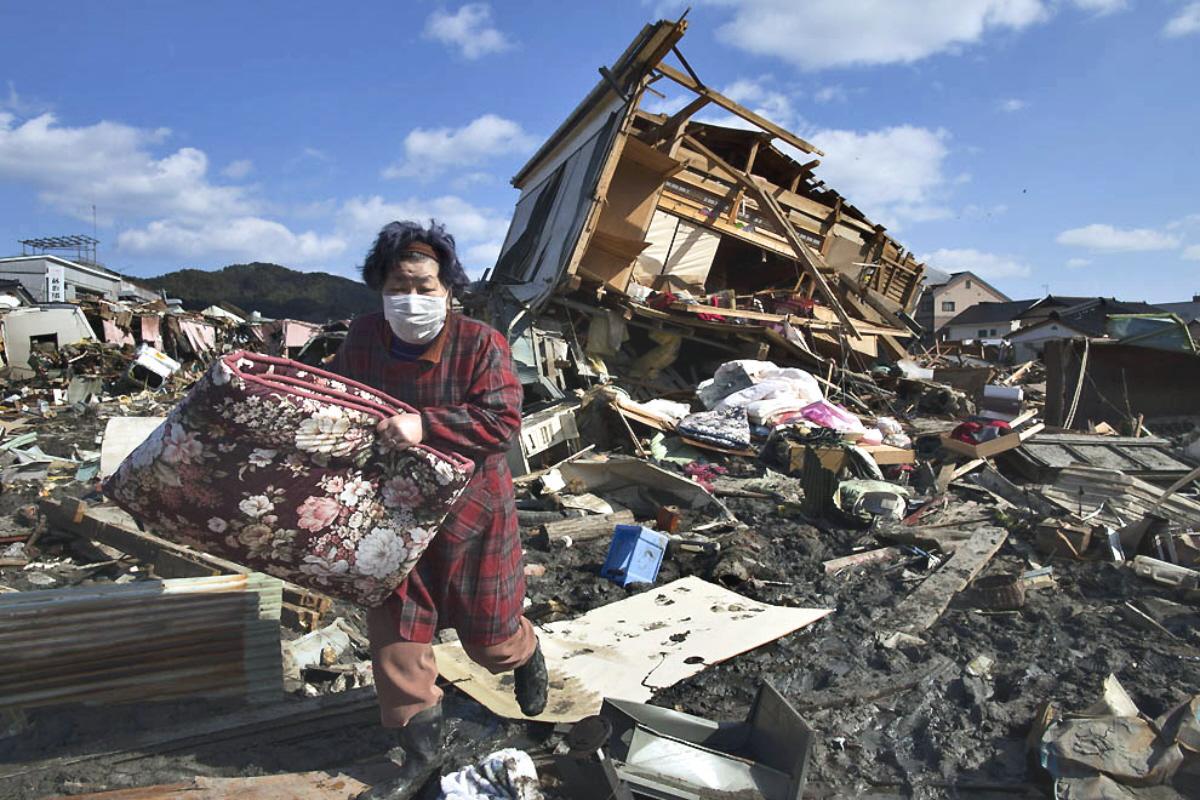
When a huge natural catastrophe occurs, it is once again the journalist's job to report. The damage caused by things such as tsunamis, cyclones, earthquakes, etc. are chaotic and disturbing. Homes damaged, people dead or dying, it is enough to cause PTSD in any person, yet a journalist must do their job.

Tutorial #7

Almost Every story ever written is accompanied by a photograph which compliments the journalist's writing. Pictures have been used to tell stories since the time of the cavemen, who drew pictures on cave walls depicting hunts and tribal rituals. In contemporary times, however, a photojournalist uses not only a digital camera but photographic skills to portray emotion and tell a story. However, it is not as simple as point and click. There are many aspects that need to be taken into account such as angle, focus, outline, lighting and the subject of the photo.
For example, if I, as a journalist, chose to do a story on the Black Saturday Bushfires, I would choose to take a photo such as this one:


Instead of:


This is because the first one shows emotion in the damage surrounding the family. They stand in the middle of a wreckage assumed to be what's left of their home. The photo is also visually appealing. This does not mean that the reader will enjoy seeing such damage, it means that it is easy to look at, the family is in the centre surrounded by the colourless wreckage, which borders the photo.
The second photo isn't as visually appealing. Yes, it does show the actual fire that destroyed homes, but the layout isn't as good as the first. This photo is clearly divided into thirds, with one extremely bright and colourful strip cutting horizontally through the middle. The fire is cut off by the roof so the image is also incomplete.
One example of famous photojournalism is Kevin Carter's photo of a vulture stalking a small child in Africa in 1993. Whilst there is much argument over the morals of the photo, the picture itself would be great to use in a story.

kevin-carter-vulture
 
There is much emotion that can be provoked by this photo. Also, the focus of the reader is drawn to the vulture despite the fact that the child is in the foreground. There is a story told through this picture, even without words to accompany it.
Yet another aspect which has to be taken into account when choosing a photo to accompany the story is what the readers will expect to see. With a lot of stories the cliche and predictable picture will work a lot better than a picture that will make the reader ask, "Why is that picture there?" And example used in class was a story about a gum cleaning machine. The cliche picture of gum stretching between a shoe and the ground was chosen to be better than a picture of the cleaning machine.

Friday, 5 April 2013

Basketball Grand Final: Saints vs George Roberts

On Thursday, 4th of April, at James Cook University, tension was boiling between the two residential colleges, George Roberts and Saints Catholic College. The two women's teams both played really well, however, of course, there can only be one winner.
Both teams took turns of scoring between three and five goals in a row, with Katie-Anne Batty scoring many points for George Roberts and Althea Bowden scoring plenty for Saints.
George Roberts took the lead before half time, when the scores were seventeen to thirteen. As the game progressed, the scores became extremely close, both tying at 22 in the third quarter, increasing the tension. However, to the dismay of the Saints team and their supporters, George Roberts won thirty to twetny-three.
Saints player Sophie Manoy said, "We played very well but we went down in the end." The Saints had hoped for a victory as George Roberts has been defending champion for several years. However, the spirit of the players continued off the courts.
While basketball is said to be a non-contact sport, there were several trips and falls, some which led to penalties, others which didn't.
Half of George Roberts' goals were penalty shots, as opposed to the Saints who scored more goals in the proper game than with penalty shots. It could be argued that this says a great deal about the skill of the players.
Out of the Saints team, two girls stood out more then others. Sports representative Althea Bowden and well known sports-player Liv Reynoldson could be seen giving 110% (not to say that the other girls weren't) and it could be plainly seen that these girls were the ones targeted most, not only by George Roberts players but their supporters as well.
Overall it was a good game which led to sore throats from cheerers on both sides. In the end, it's the spirit that matters, and there was an abundance of this from both teams.

Tutorial #6

This week the class revised much of what we have learnt in the past, such as the inverted pyramid technique and what it means to be a journalist. However, there is a new aspect of journalism that was explained to us. In every story there are facts, and these facts have to come from somewhere, right? They come from sources, which are the people who are responsible for the information.
Any facts which are not well known or widely accepted must be referenced, otherwise it counts as plagiarism.
Sometimes, however, a source may not want to be recognised for the information they give. This could be due to many reasons. Perhaps they are revealing negatives about a company they work for and fear for their job, or maybe they witnessed a crime and would like to keep themselves safe from criminals. There are many scenarios that could lead a person to wish to remain anonymous.
The source may or may not wish for their statements to be put directly in an article. When information is "on the record," the source can be quoted and named. "Off the record" information may be used, but the source can not be named or attributed to it in any way (anonymous source). "Background" information cannot be used in the article in any way, but is rather there for the journalist's background knowledge so that they gain a better understanding on the discussion.

During the tutorial, the class divided into pairs (although I was in a group of three) and we were told to write a profile story on each other. A profile story is a journalistic story about a particular person and what they have done, what has happened to them, or anything that would make a good story. However, the main focus is on the person in question. For example, I interviewed a girl named Brittany, and I will be able to write a story on her love of music and the concerts she has gone to and plans to go to in the near future. The story has a word limit of five hundred words, so I will be able to expand it, giving brief histories of the concerts and their beginnings and explaining the style of music that Brittany appears to like.

Wednesday, 3 April 2013

Tutorial #5

This week's topic is news agenda and agenda setting. Agenda setting, in basic terms, is the control of reader's opinions by journalists. There are four major agenda types:
  • Public Agenda - this has to do with the topics that the public thinks is important.
  • Policy Agenda - this is about the issues thought to be important by the people who have the power to make important decisions.
  •  Corporate Agenda - what big businesses and corporations consider to be important.
  • Media Agenda - items which are discussed and concentrated on in the media.
An example of agenda setting given to the class by the lecturer was Justin Bieber's haircut and the war in Afghanistan. Today, Justin Bieber's new haircut is more likely to be on the front page and the war in Afghanistan is more likely to be further towards the back. This is because Justin Bieber is a celebrity who many people want to know everything about because he is rich, famous, talented and good looking, and that is what is considered important. It is also more pleasant to read about than war.
 Agenda setting is all about influence, and Harold Lasswell states that, "mass media injects direct influence into the audience." This basically means that the media tells the audience not only what to have an opinion about, but what that opinion should be.
There are many aspects in the "Agenda Setting Family." These include:
  • Media Gatekeeping - The media chooses what is revealed to the public and what remains hidden.
  • Media Advocacy - When a message is promoted or advertised through a story.
  • Agenda Cutting - When certain stories are pushed back or cut out because they are seen as less important than other stories.
  • Agenda Surfing (Bandwagon Effect) - This is when the media follows the latest trends and public opinion.
  • The Diffusion of News - This is the process of communication of important events to the public.
  • Portrayal of Issues - The perspective of an issue that is presented to the audience. This will usually influence the audience to think positively or negatively about a topic or event.
  • Media Dependence - Many people depend on the media, and the more dependent they are, the more susceptible they are to agenda setting.
However, agenda setting is not all bad. It does explain how readers prioritize events and topics. It also allows journalists to predict how to write a story and what they should write about, knowing that the audience will see it as important.

Animal Magnitism

At James Cook University in Townsville, students aren't the only ones who are making use of the grounds. Turkeys are seen sunning themselves, digging for grubs and just plain old walking around. It appears that some students, majority of which are female, become frightened at the sight of these birds. However, I have yet to see a single bird become aggressive towards any students, besides the occasional warning cluck if they get too close of course.
Turkeys are not the only birds that call JCU home. Many parrots of different sizes and colours have been seen around campus, giving the students something more beautiful and less intimidating to look at than the turkeys. These parrots tend to keep to the trees but an occasional act of bravery will lead to them perching on railings not too far from students.
 On the edge of campus, on the residential campuses, a different type of animal can be found lazing around on the grass. Just the other day I was walking to my building at Saint's Catholic College and I saw that, right next to the other building, there were a couple of grey kangaroos lying in the sun. They were not disturbing anyone nor did the students attempt to disturb them, and so there is a harmony here between man and beast that allows us all to live together.
However, not all of the creatures that make their way on college are wanted. Bugs, whilst small, are a nuisance when there is an abundance of them. I live in a building where windows are always open and there is a lot of nature outside. The bugs flock to the light they see at the windows and voila! Irritation galore.
The bug infestation would be a lot worse, however, if not for the geckos that also reside with us here on college. There are many that can be seen chasing after small bugs and sometimes even each other.
Overall, rather than see these animals as beasts entering our territory, I see this sharing of space as a sign that JCU is a natural and comfortable environment that instead of destroying nature, it lives with it. This gives myself, and I'm sure many others, peace of mind that we aren't part of natural destruction.

Tutorial #4

This week, the class learnt about news values and identified them in stories on the internet. The news values are as follows:

Frequency: These are the news stories that happen quickly and frequently as to keep things fresh.

Threshold: Bigger impact means more people that the even affects. This means more interest from readers.

Unambiguity: This is when the reader can infer things from there own background knowledge of the subject of the story.

Meaningfulness: This is how much the reader can connect to the story through emotions and their own background.

Stereotype: Stories with stereotypes fulfill both the reader's and society's views of how things are expected to be.

Unexpectedness: Unexpectedness is when a story is surprising, unusual and/or shocking. These stories tend to have a greater effect than those reporting on everyday happenings.

Continuity: This is when a story is long-term or ongoing for a long period of time, meaning readers would like to keep up to date with information on the topic.

Composition: Stories are constantly in competition with each other, and therefore only the strongest and most important will become printed.

Elite Nations: The more influential a global power, the more news coverage it receives. This is because everyone wants to know about those who control our world and society.

Elite People: The rich, famous and powerful also get more news coverage because they are the people everyone wants to be.

Negativity: Bad news appears to attract more attention than good news, as people either want to know if they are threatened and how they ought to keep safe or they enjoy seeing that bad things happen elsewhere and to others rather than themselves.

Drama: A story is presented as just that, a story, which entertains through drama.

Visual Attractiveness: Visuals are extremely important because they are what the reader notices first. Photos and good formatting make an article look more attractive.

Entertainment: Entertainment value allows the reader to enjoy the article rather than be bored by it.

Proximity: Proximity is how close something is to the reader's home or place of importance. Obviously, the closer it is, the more it will affect the reader, making them more interested.

Brevity: This is everything that goes towards a story, such as timing, order and the control of flow between stories, particularly on TV.

Celebrity: Similar to the news value of elite persons, the richer and more famous a person is, the more people want to be them and want to find out about them.

Good News: Good news makes people feel warm and fuzzy inside, and readers will look forward to this feeling when reading it.

Relevance: This is when a story can relate to a reader's situation.

Despite the large amount of news values listed here, these are only a few of the news values in the world of journalism.

Created From Cardboard, Filled With Heart


Caine’s Arcade Goes Viral

On Sunday afternoon dozens of people, mainly families, flocked to a small Auto-parts shop in East LA to play at Caine’s arcade, a nine year old boy’s world of homemade cardboard games.
The surprise event was organised by Nirvan Mullick, Caine’s very first customer. Mullick had entered the Auto Shop looking for a spare part, but found more than he expected and ended up spending $2 for a Fun Pass, giving him 500 turns at the cardboard arcade.
Mullick said, “This kid’s a genius ... (and) the fun pass is an awesome deal.” With the help of Caine’s father, Mullick organised a flash mob to appear at the arcade on a Sunday afternoon.
Caine’s father had been worried that Caine would be bullied at school, as none of the other children believed that Caine had his own arcade. Caine even went as far as to stop wearing his “Caine’s Arcade” shirt, of his own design, to school.
The event led to many people playing at the arcade and was sure to boost Caine’s confidence, who, with a smile on his face, handed out passes and prizes to happy customers.


The soccer game: Originally, Caine had only one soldier to defend the goal post. However, when he realised that was too easy for customers, he added two more soldiers to increase the challenge.


The basketball game: This is the first game that Caine made for his arcade.


The claw game: This is Caine's personal favourite. This game consists of a simple claw which hooks onto the toys, which originally belonged to Caine. This "machine" is of Caine's own design.


The prizes: When a customer wins a game, their reward is one of many toys donated by Caine himself. Only nine years old himself, he says that he does not miss the toys, as they were from when he was little.

Thursday, 21 March 2013

Tutorial #3

 
During this week's tutorial we were required to work in groups and explain how we would use convergence to improve a particular journalism story that we found in a newspaper. My group, consisting of two other members, chose a small story about a rottweiler dog who attacked a man. We decided (although I have altered some) on the convergence as follows:

Internet
The web page would have several pictures of rottweilers, both looking vicious and innocent. This allows the reader to identify which dog breed it is. There would also be pictures of the injuries that resulted from the attack. Links from other dog attack stories would also be provided. In the actual text, we would include an interview with the victim, or if that is unavailable, a victim of a separate yet similar dog attack.

Radio
The introduction to the story would be the sound of dogs barking and/or growling. After an explanation of the story, the presenter would invite listeners to call in about their experiences with dog attacks and ask their opinions on what should be done about the dogs. Once the calls run out, the presenter can share his view on the subject before the section finishes with the song, "Who Let The Dogs Out."

Television
On television, the reporter would begin by introducing the story, while pictures of rottweilers and dog attack injuries flash in the background. If there were any eye witnesses, there would be an interview with both them and the victim (separately) to have both and inside and outside perspective on the attack. A video would also be shown of police dogs being trained to attack, to show the ferocity that the animals can possess.

Twitter
While not much can be said on Twitter with a one hundred and forty character limit, the story can still be presented efficiently. The title, "Dog Attack," followed by, "Man's Best Friend?" would certainly catch the attention of Tweeters. A picture of a growling or barking rottweiler would also be included along with a link to the web page that the story is published.

Facebook
The story on Facebook would be similar to the story on Twitter. The headline, "Dog Attack" followed by "Man's Best Friend?" would still capture the attention of Facebookers. Once again a picture of a ferocious looking rottweiler will certainly enhance the impact of the story. What will differ from the Twitter story, however, will be that the whole story would be published along with some quotes.

This use of convergence, I believe, greatly improves the story from the simple news article found by the group.

Thursday, 14 March 2013

Red Riding Hood


Red Riding in “Da Hood”
A Good Deed Paid in Bad Blood
Wednesday, 4th March, 2013 


THE Heart Disease bike ride has made news all around the world for over a month now, with people from many different countries hopping on their bikes and travelling through neighbourhoods collecting money for those who have the terrible sickness. These riders can be identified by the red clothes that they wear, commonly cloaks and jackets.
One of these charity riders, however, got more than they bargained for on Monday when they were attacked. Luckily for them, a passer-by saw what had happened and came to the rescue.
Christine Spencer, 19, was participating in the ride in honour of her sick grandmother, who has been suffering from heart disease for almost a year. Spencer found herself in an unknown part of town and came face to face with what has been nicknamed as “Da Hood” to the local townsfolk.
Although it is well known that criminal acts and public disturbances are a regular theme in “Da Hood,” Spencer, who is new to the town, did not realise the danger she was in. Recognising that she was lost, she did not hesitate when a man who introduced himself as Blaine Wolfe assisted in giving her directions.
Many would recognise the name “Blaine Wolfe” as the man convicted of the rape and murder of two women ten years ago. Wolfe was granted bail after showing good behaviour and has been back among the public for only three weeks.
Spencer recalls the moment, “He seemed really nice, and I was comfortable taking directions from him.” However, the directions given led Spencer into a blind alley, where he attacked her, holding her down and beating her.
Luckily for the victim, a nearby builder who was working on a burned down home, saw Spencer being followed by Wolfe and pulled the attacker off her. Wood Carter comments, “I saw him walk into the alley after her, and I knew something wasn’t right. He looked familiar, like I’d seen him somewhere before. Then after a few moments I remembered reading about him in the papers, and I knew I had to do something.”
Carter pulled the attacker off of Spencer and they allegedly brawled until Wolfe fell unconscious to the floor. Carter called both the police and an ambulance before attempting to revive Spencer.
Blaine Wolfe has been arrested and is facing another fifteen years in prison. After emerging from the courtroom, he refused to make any comment other than several cuss words towards reporters.
Christine Spencer has suffered severe bruising to her head and body but is expected to make a full recovery. Her grandmother flew into town last night to keep her company by her bedside. Mrs Spencer said, “I am honoured that my granddaughter has gone through so much to help people like myself. I am very sorry that she had to go through something so terrible, of course, but she is a proud girl and will hold her head high for having risked so much for such a cause.”
Spencer and her grandmother also thanked Wood Carter for his assistance. Carter will be given a medal of honour during a ceremony this Friday to acknowledge his bravery and chivalry.